

Why a Cooled Hydraulic Heat Exchanger Matters in Modern Compressor Systems
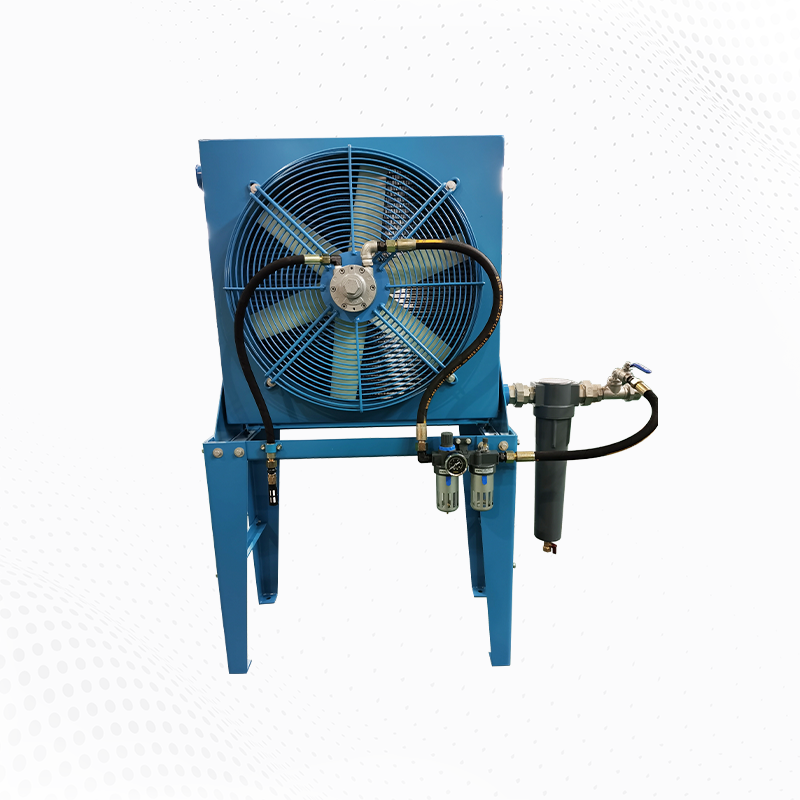
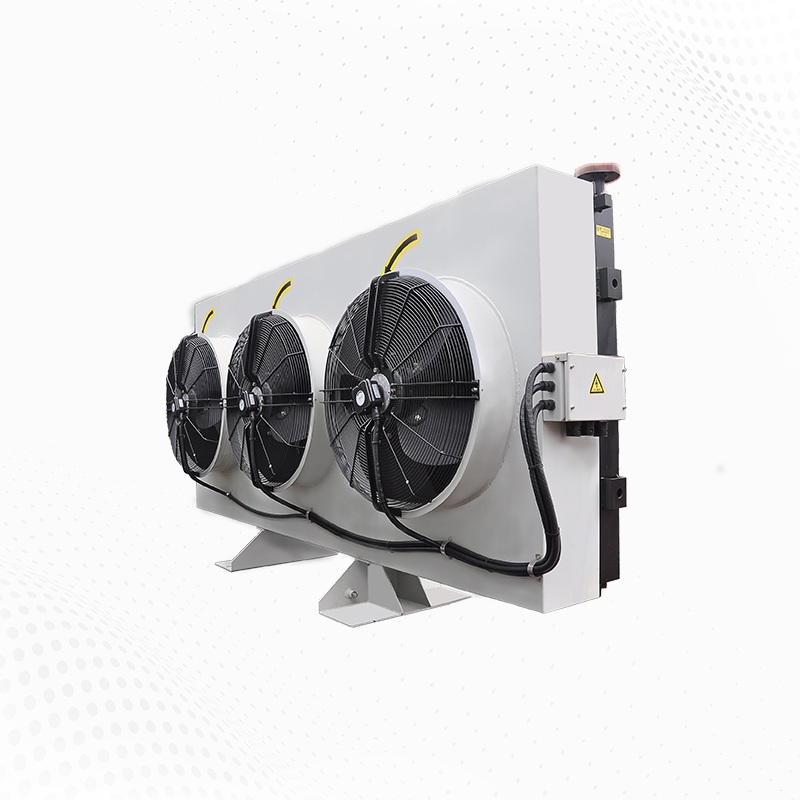
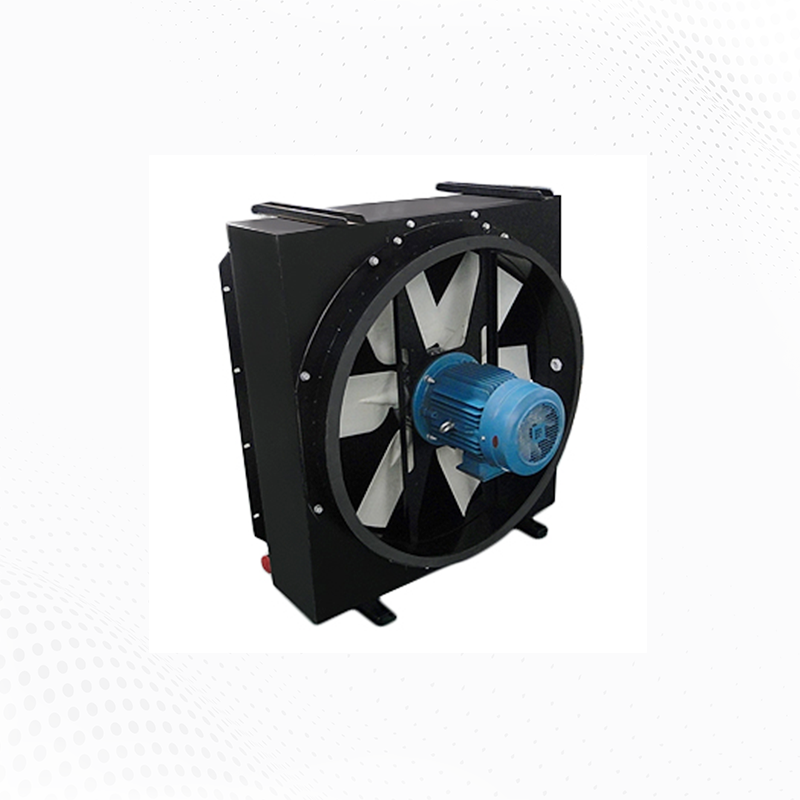
When you work around compressors every day, you quickly learn that temperature control is not something you can treat as an afterthought. At YUDA, we see this constantly—equipment that should have lasted years ends up shutting down early simply because the heat wasn't managed well. That's exactly why a cooled hydraulic heat exchanger plays such a crucial role in real-world operations. And in many industrial setups today, pairing a reliable cooled hydraulic heat exchanger with advanced hydraulic cooling systems and an air cooled hydraulic oil cooler can dramatically improve the stability and lifespan of screw compressors. These technologies—combined with well-designed industrial hydraulic cooling solutions—help operators avoid costly downtime.
Understanding Why Cooling Quality Matters
Screw compressors generate a tremendous amount of heat under continuous operation. Without the right form of control, that heat eventually affects the oil, the seals, and every internal component. This is exactly where a cooled hydraulic heat exchanger steps in. It keeps the oil within a safe operating range, making sure viscosity remains stable. This improves lubrication, efficiency, and long-term reliability. The same principle is foundational in advanced hydraulic cooling systems, which are now widely adopted across manufacturing and HVAC applications.
For heavy-duty compressor environments, the combination of a cooled hydraulic heat exchanger, an air cooled hydraulic oil cooler, and well-matched industrial hydraulic cooling solutions can be the difference between running smoothly and running into constant maintenance issues. These setups manage not only heat but also long-term fluid stability.
Aluminum Cooling Cores Make a Difference
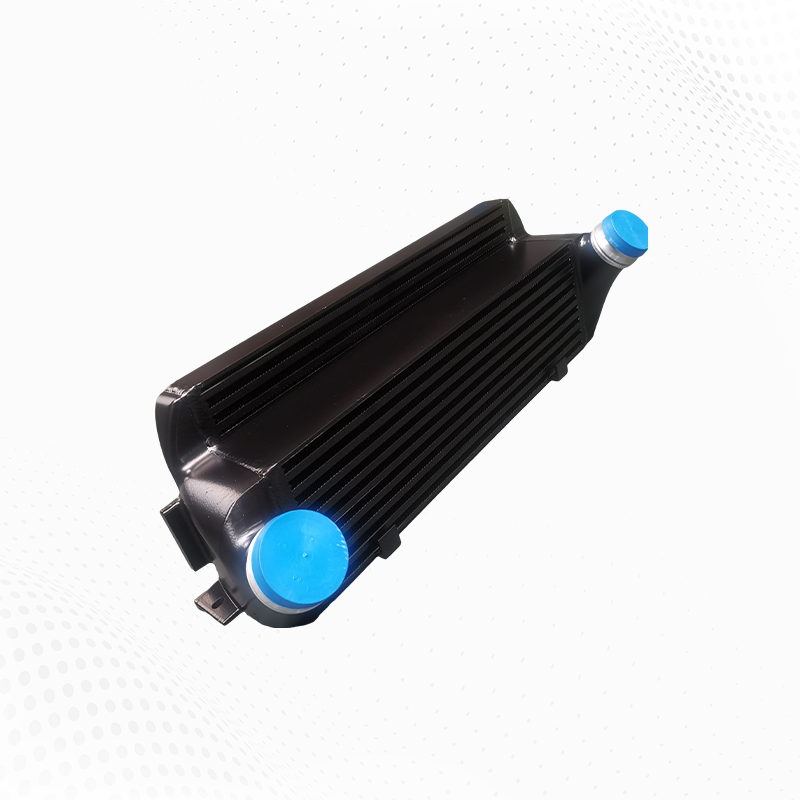
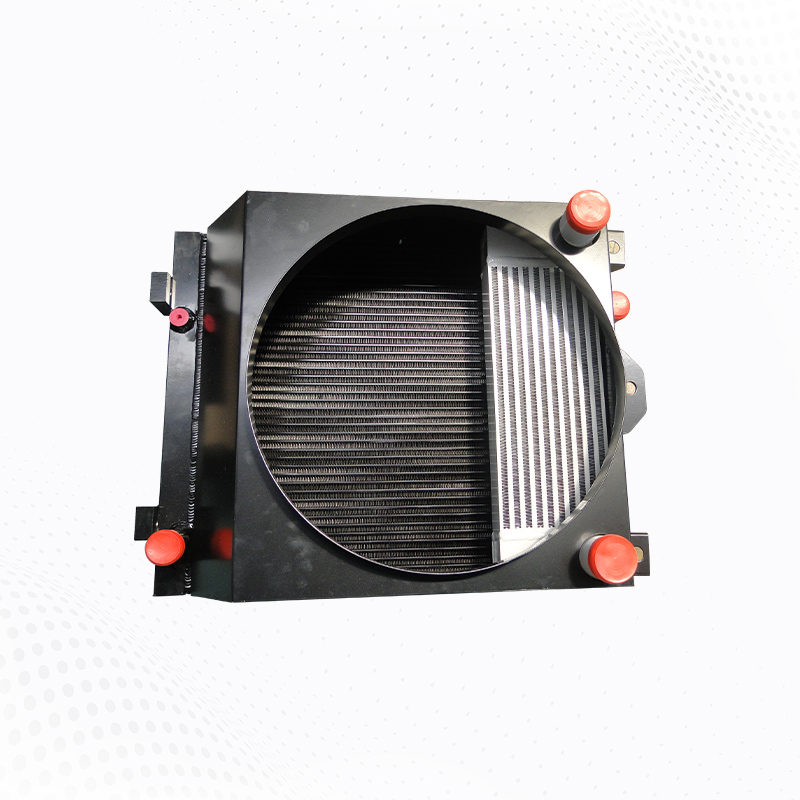
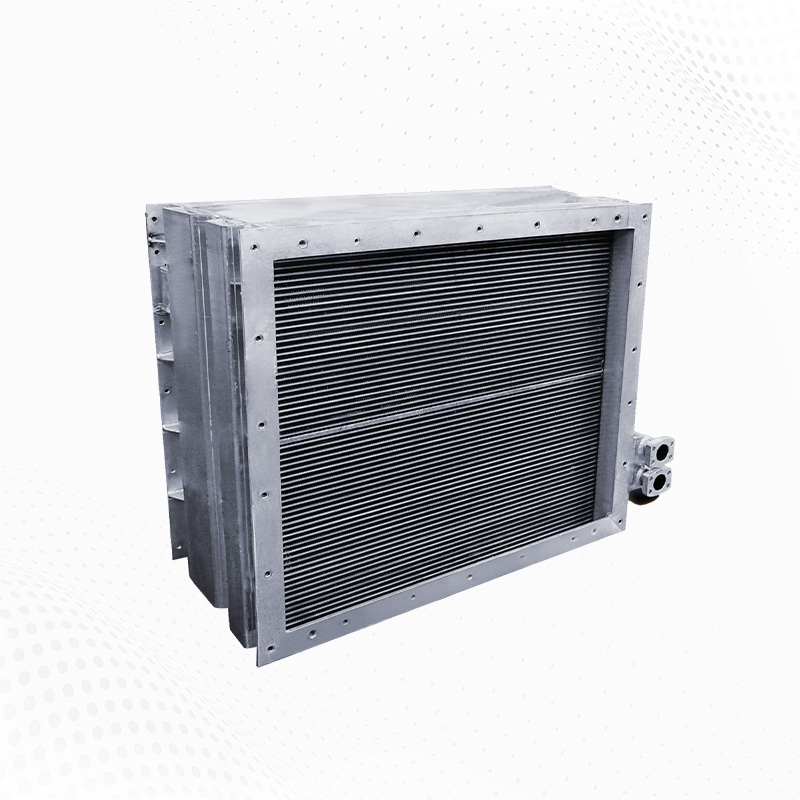
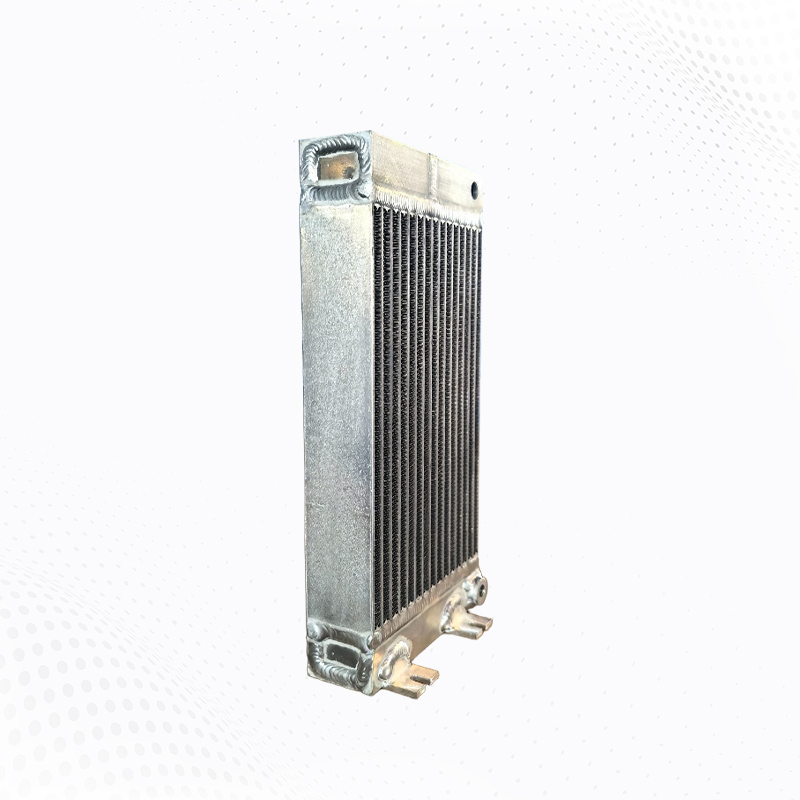
Our aluminum air-oil cooler design has become a preferred choice for customers who want dependable temperature control. Aluminum transfers heat efficiently, resists corrosion, and keeps the structure lightweight—exactly what most industrial hydraulic cooling solutions require. A cooled hydraulic heat exchanger built with aluminum plates and bars provides a larger surface area for heat exchange, meaning the compressor oil cools faster and more consistently.
This is also why aluminum cores show up frequently in advanced hydraulic cooling systems. They deliver high heat dissipation without adding unnecessary weight, and when paired with an air cooled hydraulic oil cooler, the airflow path becomes even more effective. For mobile units or machines with tight installation spaces, this combination is extremely practical.
Stable Operation, Lower Maintenance
Every operator wants fewer breakdowns. What many don't realize is how often heat is the root cause of those breakdowns. A cooled hydraulic heat exchanger directly prevents overheating, but more importantly, it prevents the secondary damage that overheating creates. Oil breakdown, carbon deposits, varnish formation—all of these hazards decrease dramatically when proper cooling is used.
When a cooled hydraulic heat exchanger is integrated into advanced hydraulic cooling systems, the compressor can maintain consistent output, even during long daily operating cycles. Pairing that with an air cooled hydraulic oil cooler ensures airflow is strong enough to keep the entire loop in a healthy range. Reliable cooling is at the heart of dependable industrial hydraulic cooling solutions, which is why clients who upgrade usually notice immediate improvements.
Flexibility Across Industrial Applications
The great thing about modern cooling architecture is that it adapts across industries. Whether a customer is running a production line, a workshop, or an HVAC installation, a well-designed cooled hydraulic heat exchanger fits right in. YUDA provides models that integrate smoothly with different compressors, voltages, space constraints, and airflow directions. This versatility is also built into advanced hydraulic cooling systems, which often combine air cooling and hydraulic circuits to handle diverse working conditions.
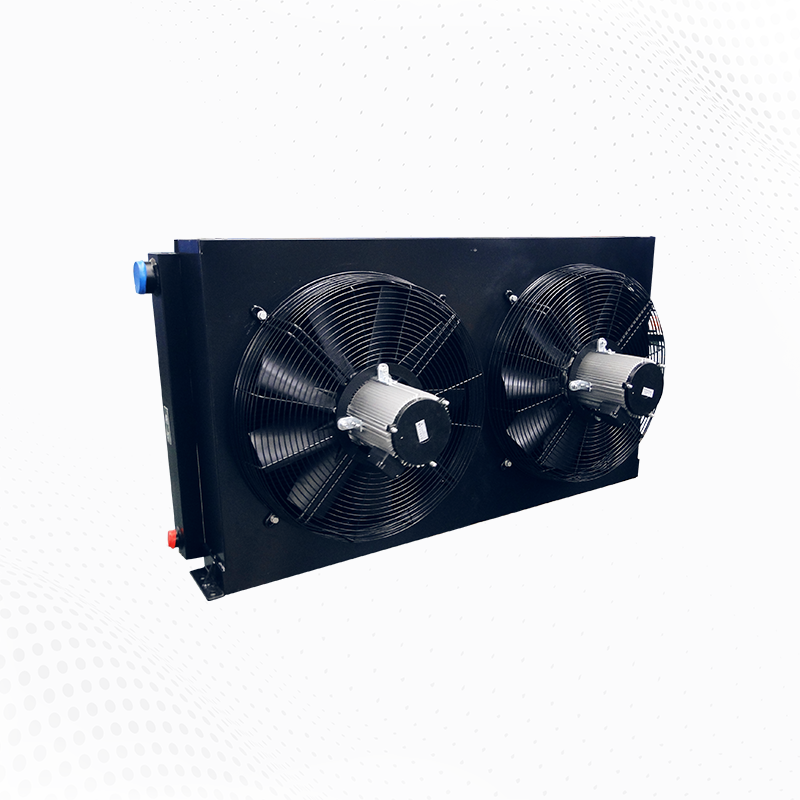
This is one of the key reasons operators prefer an air cooled hydraulic oil cooler over water-based systems. It offers simpler maintenance and avoids water quality issues while still forming part of reliable industrial hydraulic cooling solutions that can endure demanding environments.
Energy Efficiency That Operators Can Feel
Energy consumption is now just as important as output. A poorly cooled system burns more energy than most operators realize. By adding a cooled hydraulic heat exchanger, users see more stable pressure, smoother temperature curves, and better compressor efficiency. The same applies when they adopt advanced hydraulic cooling systems, which operate with minimal waste while maximizing cooling force. An air cooled hydraulic oil cooler also supports this efficiency by using optimized fan performance to move heat away quickly.
This trifecta—cooled hydraulic heat exchanger, advanced hydraulic cooling systems, and air cooled hydraulic oil cooler—forms the backbone of durable, smart industrial hydraulic cooling solutions designed for the long haul.
YUDA's Approach
At YUDA, we focus on real-world reliability. Every cooler is designed to help customers avoid failures and keep operations running without stress. From the design of the aluminum core to airflow optimization and model selection, we make sure each system supports the long-term health of the compressor.
